Sunday, September 7, 2014

Breeding observations Eastern Ground Parrot, Victoria

During the study by Meredith and Isles that was written up in 1980 (full reference in previous posting), 7 nests were found in Croajingalong National Park, Victoria.

Below are extracts from the Meredith and Isles report. The photos were not, as far as we are aware, part of the report and were labelled as EGP Juvenile and EGP Chicks with no acknowledgement so apologies to the photographer/s. They are used here to illustrate the first part of the text.


Monday, August 25, 2014

Looking back and eastwards


Ecological studies of the Ground Parrot have been on a state by state basis as each state in Australia has responsibility for its own wildlife.

Victoria was the first state to undertake a detailed study of the Ground Parrot, well ahead of such work in other states. At that time (1980) the Western Ground Parrot was considered to be a subspecies of the more widespread 'Eastern' Ground Parrot. The Victorian study was of the 'Eastern' Ground Parrot, but of interest to all who wanted to know more about these intriguing parrots.

"A study of the Ground Parrot (Pezoporus wallicus) in Victoria" by C.W. Meredith and A.C. Isles 1980

Arthur Rylah Institute for Environmental Research, Fisheries and Wildlife Division

Publication No. 304 of the Environmental Studies Division of the Ministry of Conservation, Victoria

Several interesting findings were made. This posting is an extract from the report (pages 35 to 37) on Movements (in the geographical sense).


Thursday, August 21, 2014

Vegetation study and survey further afield 1989

Supplementary to the 1988/89 study 'Conservation of the Ground Parrot in Western Australia' was an additional report focussing on vegetation in known and possible Western Ground Parrot (WGP) habitat.

Surveys for the presence of WGPs as well as for vegetation structure and species were undertaken in Cape Arid National Park, other parts of Fitzgerald River National Park (FRNP), and in the south-west corner of Western Australia.

At that time, WGPs were only found in the site, also within the FRNP, that was most floristically similar to the Short Road site where the radiotracking had been done.


Possible WGP habitat in FRNP. Jim, Brenda and Shapelle. Photo: Allan Burbidge.


Studying the vegetation, east of Hamersley Drive near known WGP habitat. Jim Rolfe (foreground); Shapelle McNee and Brenda Newbey (background). Photo: Allan Burbidge.


Setting out a vegetation plot in Leeuwin - Naturaliste National Park. Neil Gibson and Mike Lyons. Photo: Allan Burbidge


Vegetation plot number one in Scott River National Park. Neil Gibson and Mike Lyons. Photo: Allan Burbidge.

Saturday, August 2, 2014

Awareness raising


In winter 1990, the virtually unknown Western Ground Parrot made its first appearance in a glossy magazine. The magazine was "Landscope", a quarterly publication of the Western Australian Department of Conservation and Land Management as it was then known (now Department of Parks and Wildlife).


Monday, July 21, 2014

Plant families recorded in 1988/89 study site


The photos are frames from a video taken near the study site for the project "Conservation of the Ground Parrot in Western Australia" but much later - in 2006- by Brent Barrett and his small team who were employed by the then Department of Environment and Conservation, now Department of Parks and Wildlife. The Ground Parrot, 'Charlie', is pausing in typical low and diverse heath. Several of the plants are known food plants. The close-up is in the same spot. Note that Charlie was a wild bird, filmed in his natural habitat. In 1989, the study site and the site where Charlie was filmed were added to the  Fitzgerald River National Park.

The plant species list for the Ground Parrot study site for the project "Conservation of the Ground Parrot in Western Australia" contains 265 species. (There is more about this study in the previous six postings.)

Below is a list of all the plant families that were recorded during the 1988/89 survey of known Ground Parrot habitat. The number refers to how many different species within that family were found in the study site.

Poaceae (grasses)      8
Cyperaceae (sedges)   24
Restionaceae (twine rushes)         12
Centrolepidaceae       1
Dasypogonaceae         5
Anthericaceae          6
Haemodoraceae (paws)   6
Iridaceae              2
Orchidaceae (orchids)  1
Casuarinicaceae        4
Proteaceae (banksias etc)           40
Santalaceae            4
Olacaceae              1
Lorantaceae            1
Droseraceae (sundews)  3
Pittosporaceae         3
Mimosaceae (wattles)   6
Papilionaceae (peas)  19
Rutaceae               2
Polygalaceae           1
Euphorbiaceae          3
Sapindaceae            2
Rhamnaceae             4
Dillenaceae (guinea flowers)           1
Thymeleaceae           3
Myrtaceae (eucalypts, melaleucas etc) 46
Haloragaceae           2
Apiaceae               3
Epacridaceae (heaths) 17
Loganiaceae            3
Boraginaceae           1
Rubiaceae              1
Lobeliaceae            1
Goodeniaceae           5
Stylidiaceae (trigger plants)          8
Asteraceae (daisies)   3
Unknowns (not assigned to a family)   12

By a large margin, the Proteaceae and Myrtaceae are the most well represented, followed by sedges, peas and heaths. Each of these families appears in a more recent study that examines the filmed records from spring 2006(not yet complete) to offer a significant part of the Western Ground Parrot diet, and combined they would comprise at least 95% of the diet of that wild bird at that stage.


Saturday, July 12, 2014

Food choices and possible explanation

Like the last few blogs, this blog uses information from the unpublished 1989 report "Conservation of the Ground Parrot in Western Australia".  Below are extracts from the 'Discussion' section. The low rainfall in the study area, to the north of the then Fitzgerald River National Park boundary, is a possible reason why the western Ground Parrot's diet contains much more green fruits and flowers than that of the eastern states birds.


High plant species richness could be a key to the survival of the Ground Parrot where rainfall is both low and variable.


The photos below are frames from videos taken in spring 2006, by Dr Brent Barrett and his team. The totally wild bird, nick-named Charlie, was in the FRNP not far from the study site of the 1988/89 project.

Charlie eating a Grevillea tripartita flower (from video by Brent Barrett)

Charlie eating the green pod of a shrub in the pea family Daviesia incrassata subsp. reversifolia (from video by Brent Barrett)


Wednesday, July 2, 2014

Radiotracking Part 3, flushing, and feeding

Below is another extract from the 1989 report 'Conservation of the Ground Parrot' - a project designed to identify habitat preferences of the Ground Parrot in the Fitzgerald area, Western Australia.

Table 4 shows variations in activity levels deduced from radiotracking points. Rate of movement is in metres per hour as the birds walk as they seek their food.

The moving away from the study area was by flight.


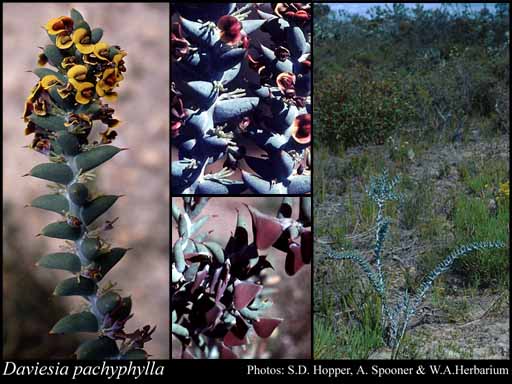
One of the food items listed above in Table 5 is shown here.The photo is used with the permission of the Western Australian Herbarium, Department of Parks and Wildlife,(http: //florabase.dpaw.wa.gov.au/help/copyright). Accessed on Thursday 3 July, 2014.  Birds were feeding on the succulent leaf bases and leaving the spines. Until this study, this was the only food selection that had previously been observed - back in 1983. (See blog entry Friday January 17, 2014)

Table 5 shows how common the food plants were in the study area. The total number of plant quadrats was 133 so Daviesia pachyphylla was recorded in just under 1/3 of them.